SBS Water & Infra Projects Private Limited
  1. Home
  2. Services
  3. Condensate Polishing Unit

Condensate Polishing Units that turn process condensate into reusable water

RO-based and Biological CPUs for sugar and distillery plants, recovering about 85% of process condensate for cooling tower, process and utility reuse while reducing freshwater intake and effluent load.

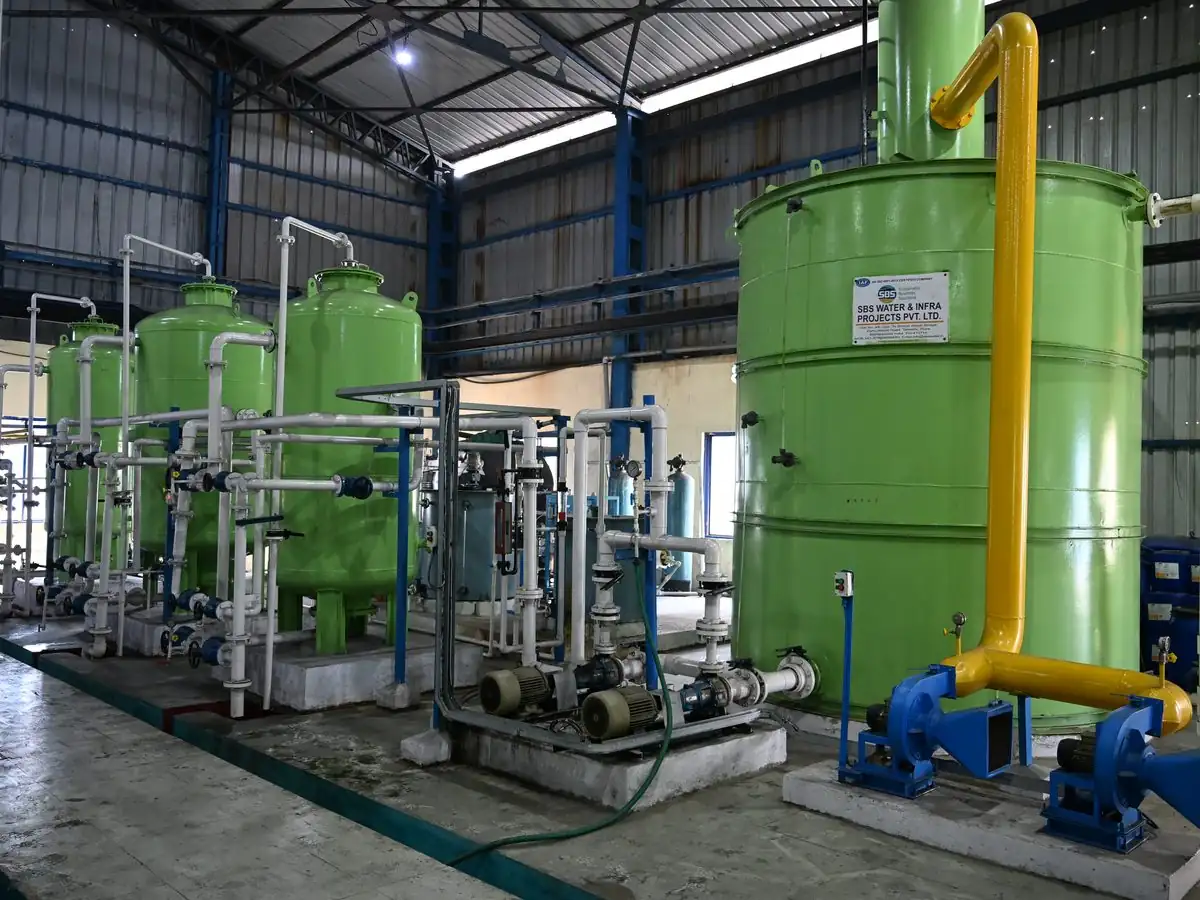
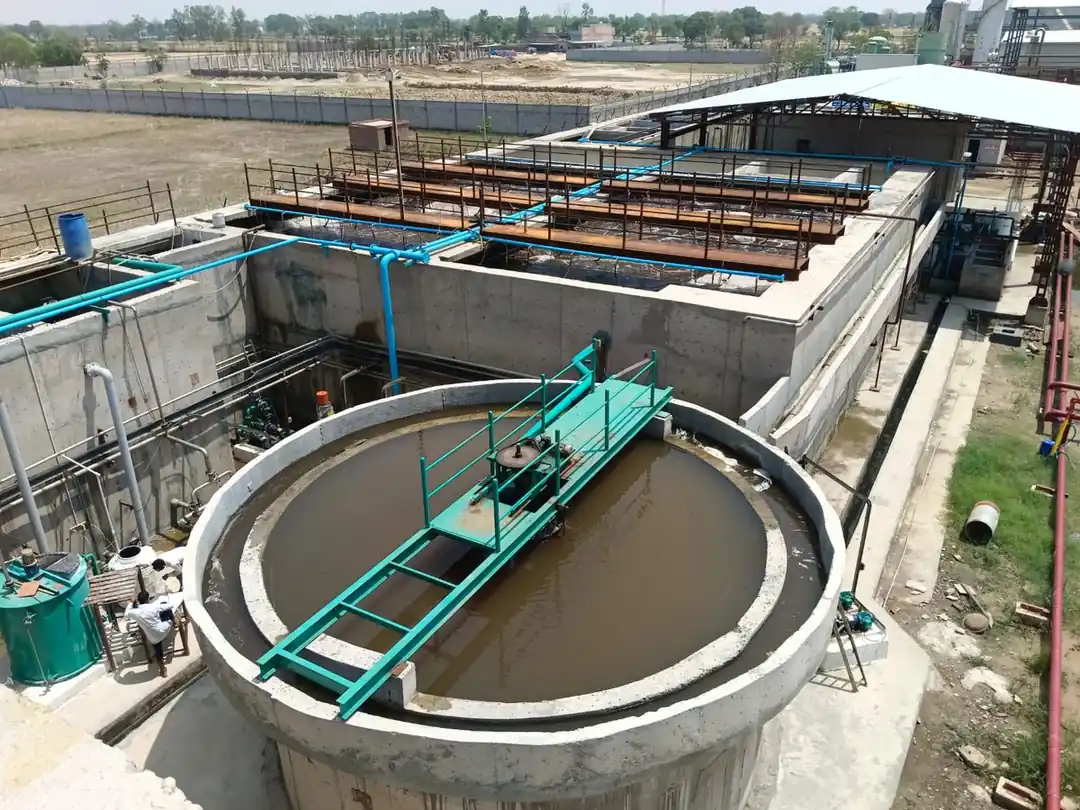
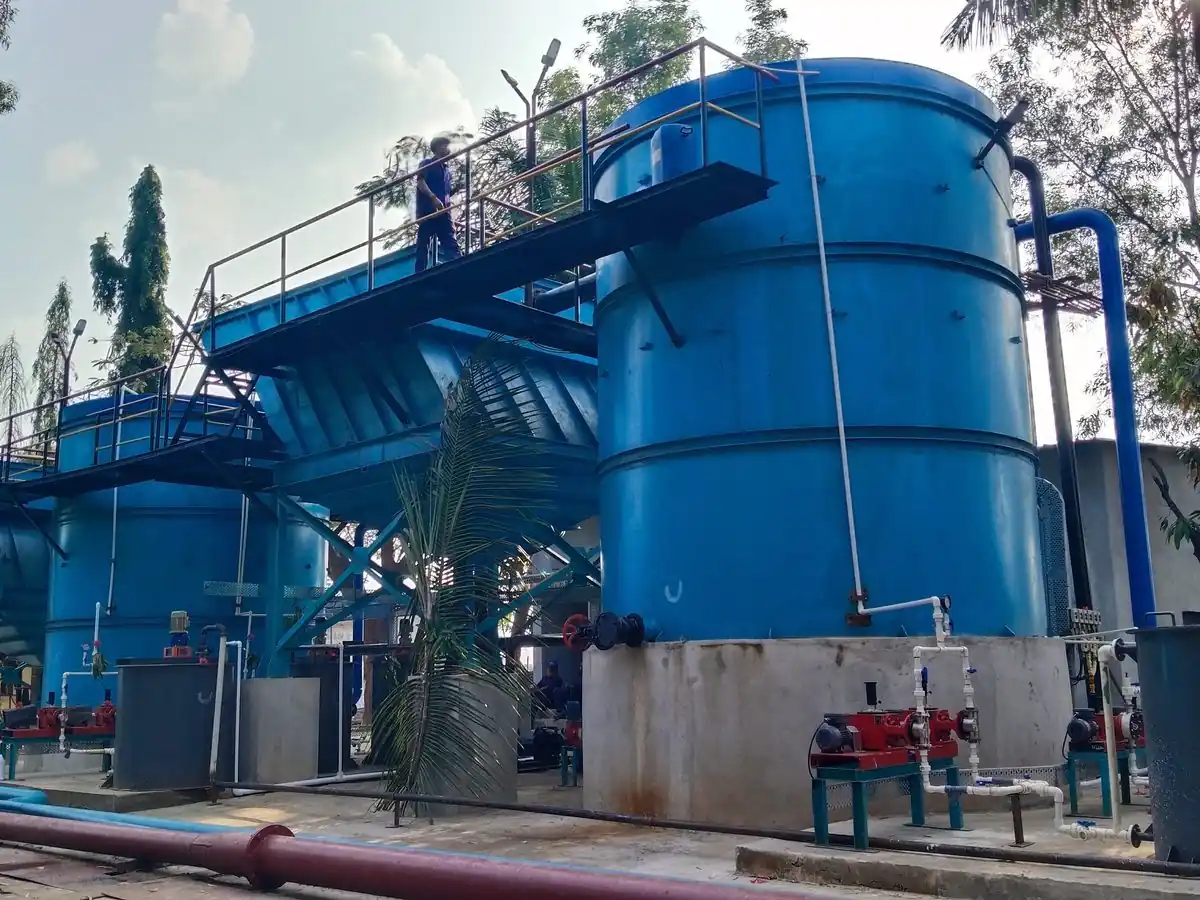
Clarifier and biological treatment tanks of the 1,000 KLPD distillery condensate polishing unit at Allianz Distillery
  • 40+CPU installations for sugar & distillery groups
  • ~85%Overall water recovery with two-stage RO
  • 300-4,400KLPD capacity range executed
  • 10+States served across India
Overview

What is a Condensate Polishing Unit?

Sugar mills and distilleries generate large volumes of condensate from evaporators, pan boiling and spent-wash concentration. This water is a valuable resource, but it carries residual organics, volatile acids, dissolved solids and elevated temperature that make it unsuitable for direct reuse or discharge.

A Condensate Polishing Unit (CPU) treats this condensate to the quality required for reuse within the plant. At SBS Water & Infra Projects Pvt. Ltd., we design, supply, install and commission two types of CPU, RO-based and Biological, built around each client's condensate characteristics, flow rate and reuse application.

  • Lower freshwater intake from river or borewell
  • Reduced hydraulic and organic load on the ETP
  • A key building block for Zero Liquid Discharge
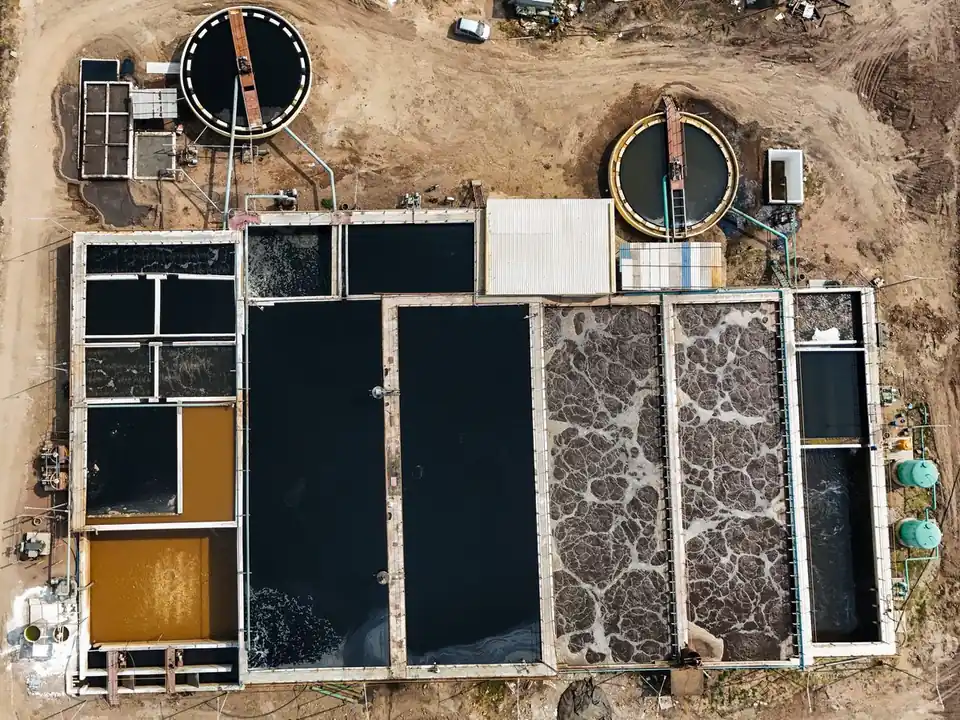
Top-down aerial view of the SBS Water treatment plant at Balaji Sugar, with clarifiers, aeration basins and process tanks
Our CPU Solutions

Built for sugar and distillery condensate

Each system is configured to the source of condensate, its quality and the final reuse requirement.

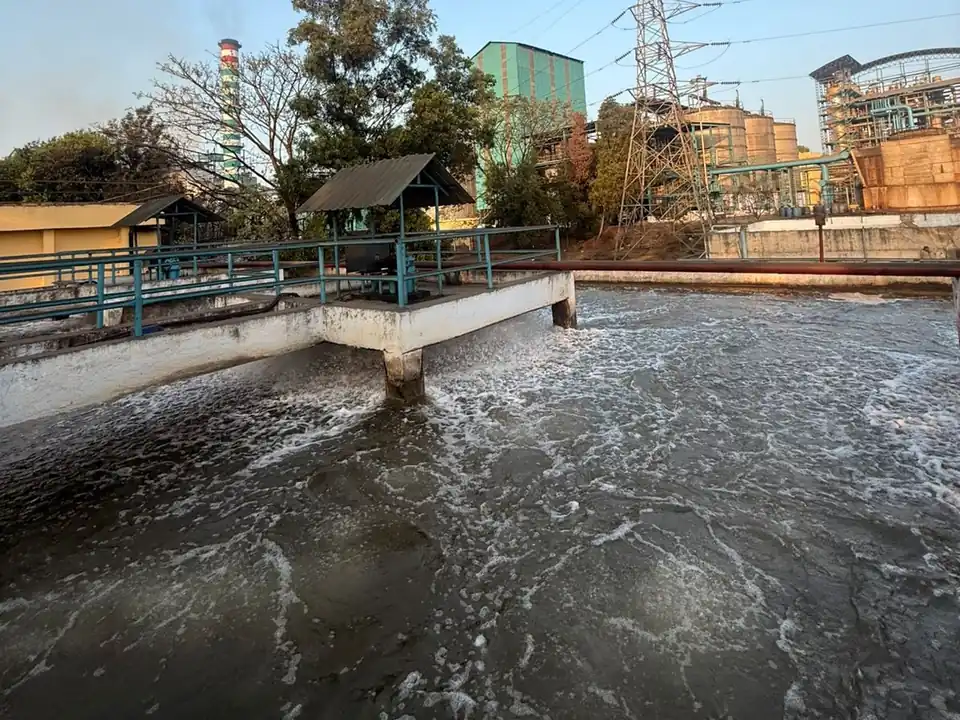
Aeration basin of the distillery condensate polishing unit at Satish Sugars, with the distillery plant behind

Distillery Condensate Polishing

For MEE and other process condensate from molasses-, grain- and cane-juice-based distilleries, which typically carry high COD and volatile acids.

  • Reduction of COD, BOD and volatile acidity
  • Water for fermentation, dilution & cooling tower
  • Upgrading of existing distillery CPUs
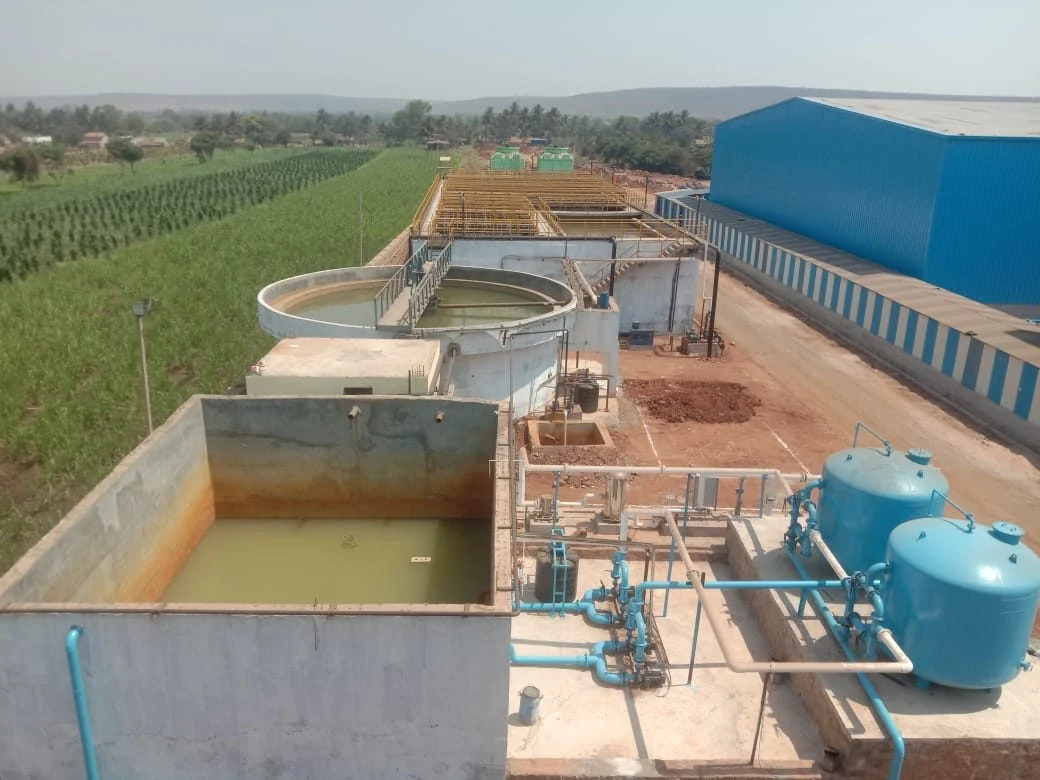
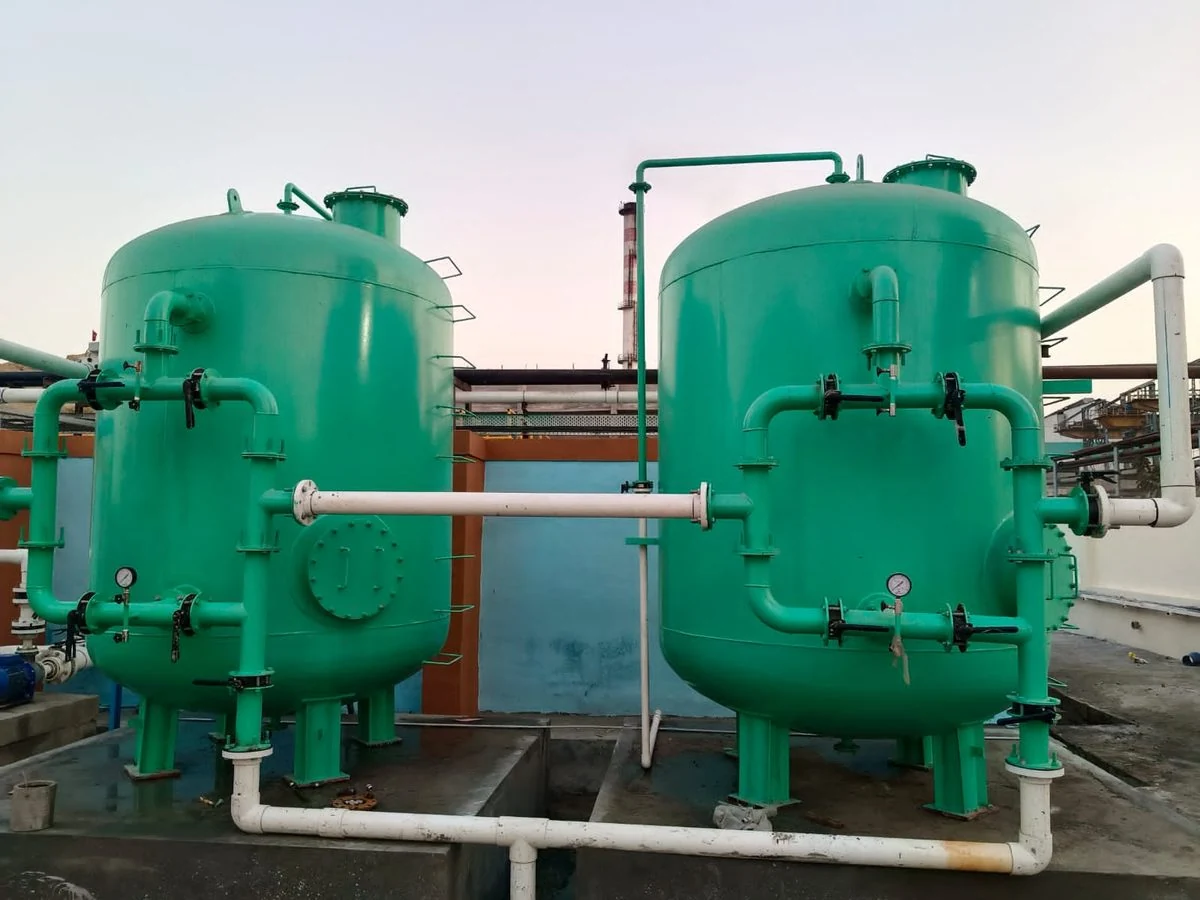
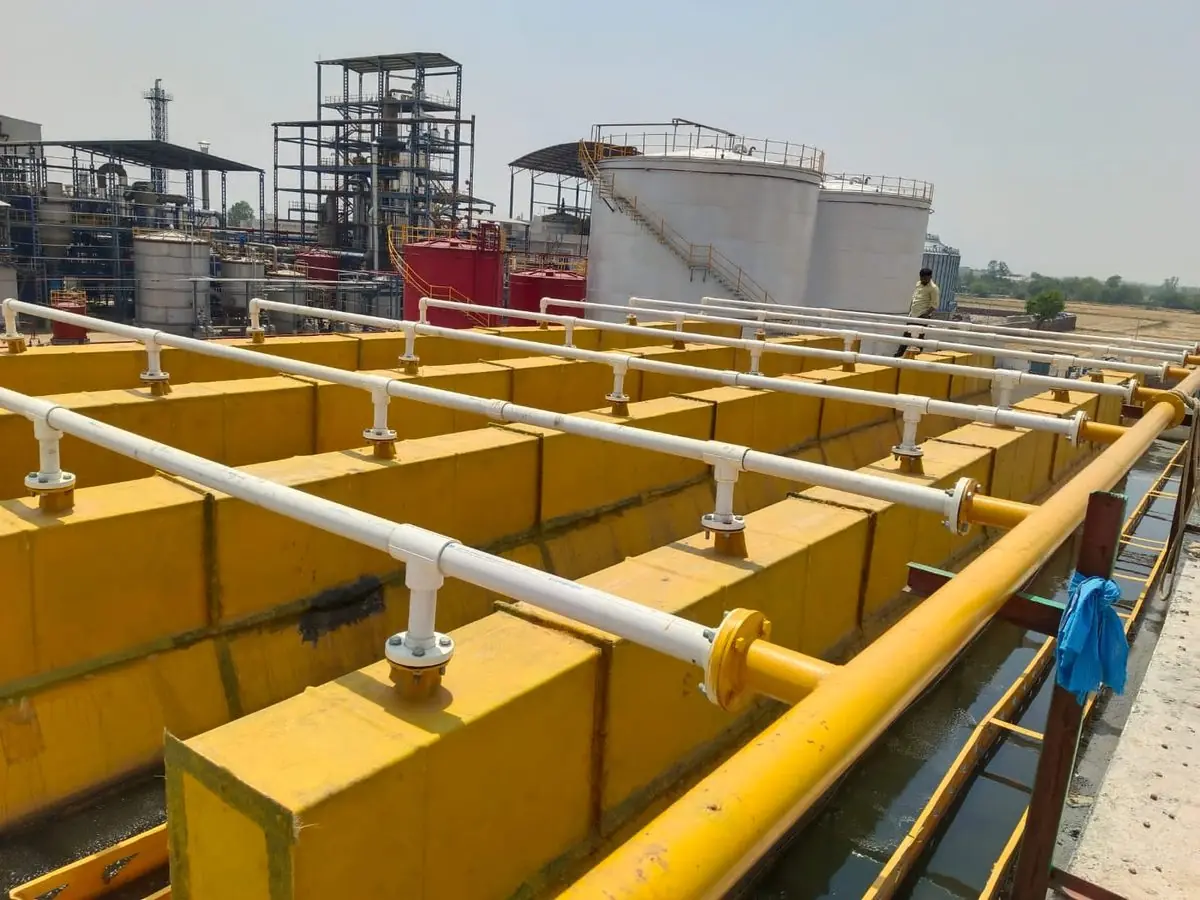
Clarifier, treatment tanks and pressure filters of the sugar condensate polishing unit at Belgaum Sugars

Excess Sugar Condensate Polishing

For excess condensate generated in juice evaporation and pan boiling, recovering surplus water during the crushing season.

  • Removal of sugar carry-over and organics
  • Reduced raw water drawal
  • Supply, modification & performance upgrades
Blue reactor tanks, settler and dosing pumps of the integrated treatment plant at Satish Sugars

CPU Integrated with WTP / ETP

A coordinated scheme where treated condensate, raw water and effluent streams are managed together for maximum recovery.

  • Single-point engineering responsibility
  • Optimized water balance across the plant
  • Pathway to Zero Liquid Discharge
Two CPU Technologies

RO-based or Biological: matched to your condensate

We offer two proven CPU technologies. The right choice depends on the organic strength of the condensate and the required reuse quality.

Criteria RO-Based CPU Biological CPU
Best suited for Sugar excess condensate and lower-strength process condensate High-COD distillery condensate: dryer & evaporation condensate, spent lees
Core treatment Cooling, alkali dosing, flocculation, dual media filtration, two-stage RO Cooling tower, pH correction, anaerobic digester, two aeration tanks, clarifier, sand & carbon filters, UF, RO-1 + RO-2 booster
Organic removal Mainly by RO membranes Biologically first, then polished by UF + RO
By-products Small RO reject stream Biogas, biological sludge, RO reject
Footprint Compact Larger, with biological tanks
Process

How our RO-Based CPU works

Raw condensate is typically acidic (pH 3.5-4.5) and warm (37-40 °C). Each stage prepares the water for the next, so the membranes run reliably and deliver high recovery.

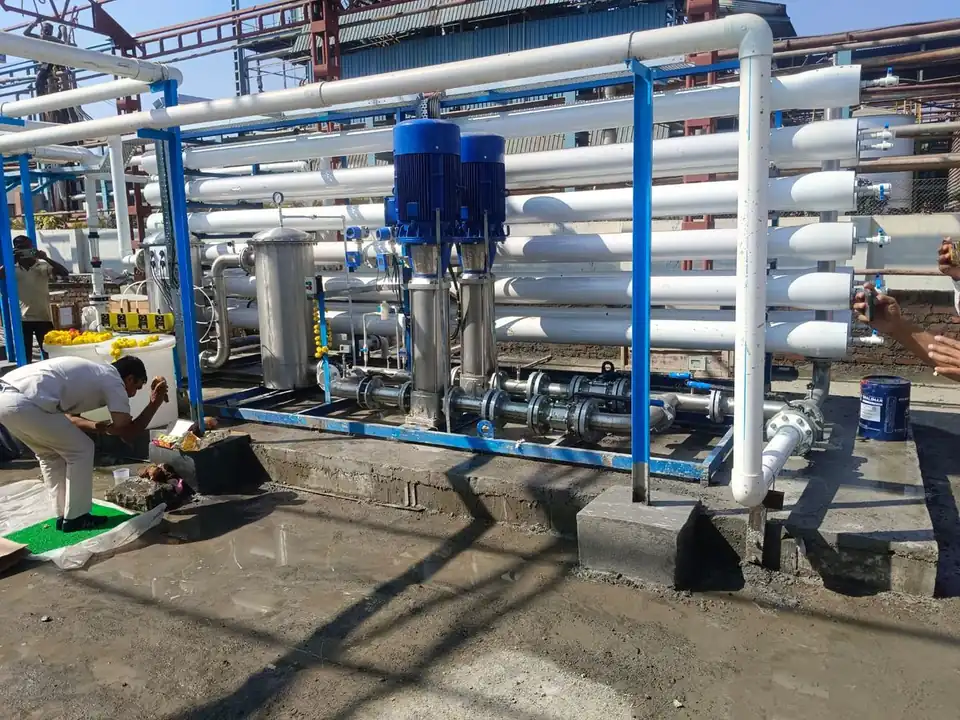
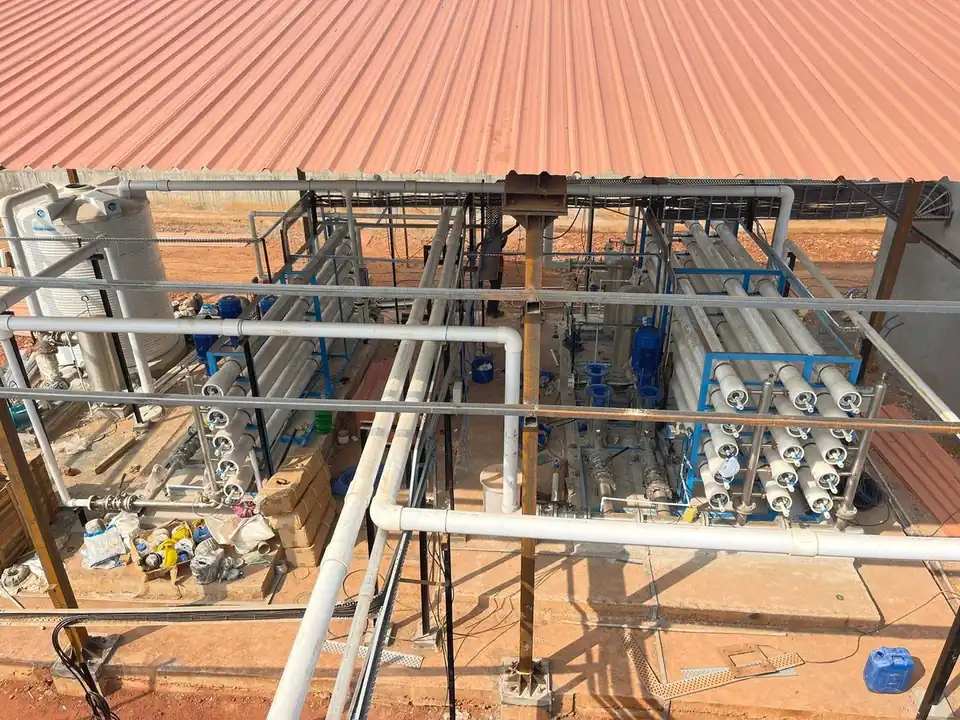
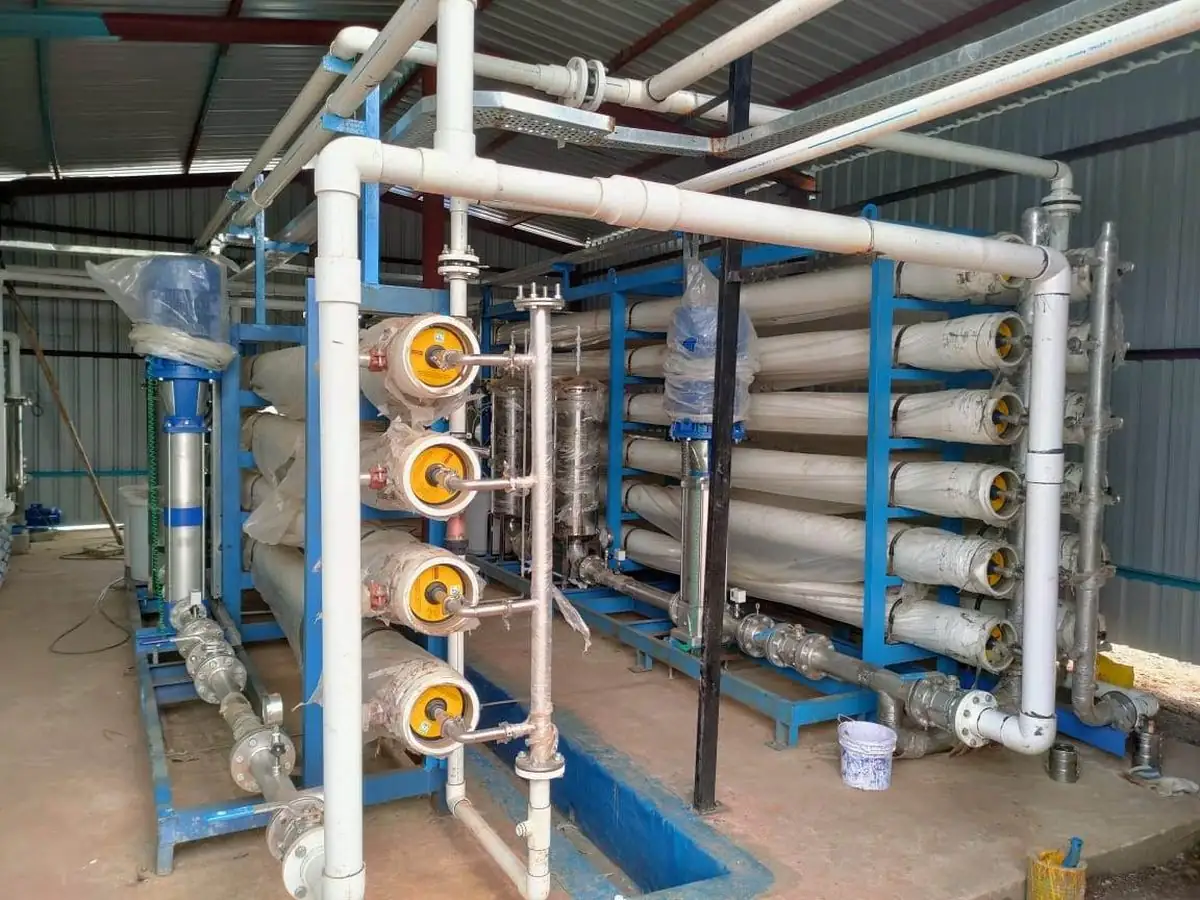
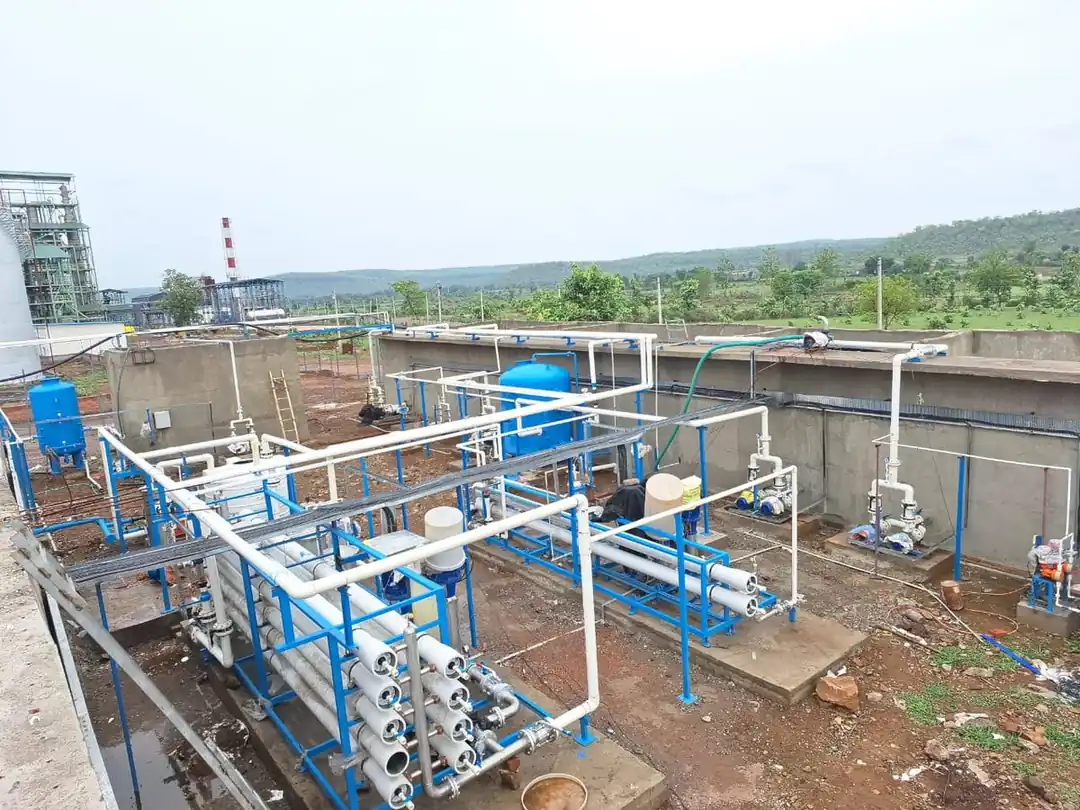
RO-based condensate polishing skid with membrane pressure tubes and high-pressure pumps at Shri Pandurang SSK
RO-based condensate polishing unit process flow Condensate collection, cooling tower, alkali mixing, flocculation, settling, filter feed and dual media filters feed the RO feed tank. RO-I (about 67% recovery) sends its reject to RO-II (50-55% recovery); permeate from both stages goes to the common permeate tank (about 85% total recovery) for reuse, and RO-II reject goes to the ETP. From evaporators / MEE · pH 3.5-4.5 · 37-40 °C RO-I permeate RO-I reject RO-II permeate Condensate Collection Tank Cooling Tower 37-40 → ~32 °C Alkali Mixing Tank pH correction Flocculation cum Alkali Contact Tank Settling Tank Filter Feed Tank Dual Media Filter TSS < 2 ppm RO Feed Tank RO-I (2 trains) ~67% recovery RO-II (on RO-I reject) 50-55% recovery Common Permeate Tank ~85% total recovery Reuse Cooling tower & process RO-II Reject → ETP / disposal
Pre-treatmentMembranesPermeateReuseRejectPermeate lineSwipe to see the full flow
Process

How our Biological CPU works

For high-COD distillery condensates (dryer condensate, evaporation condensate and spent lees), our Biological CPU combines anaerobic and aerobic treatment with sand and carbon filtration, Ultrafiltration and two-stage RO.

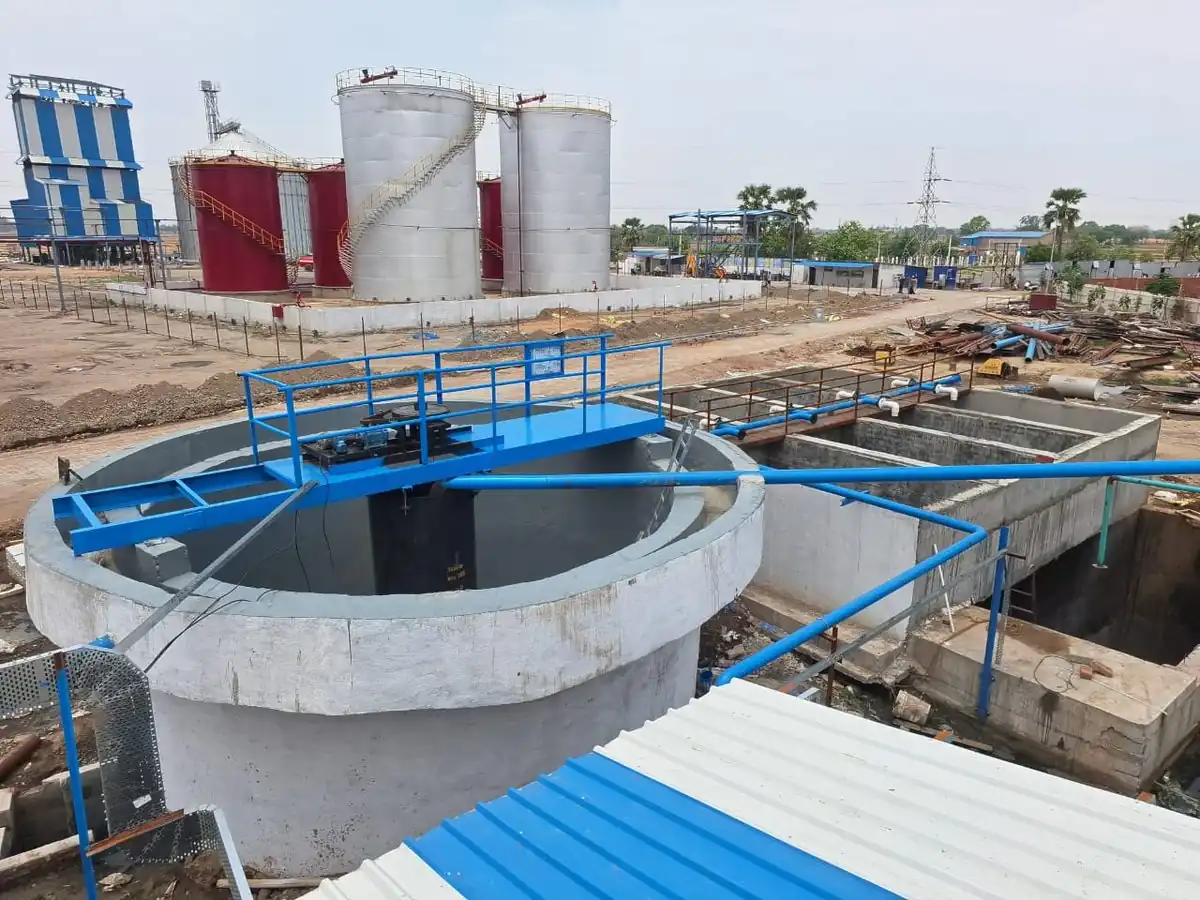
Clarifier with drive bridge and treatment tanks under construction at ESE, with distillery storage tanks behind
Biological condensate polishing unit process flow Cooling tower, condensate collection, pH dosing and neutralization feed an anaerobic CSTR reactor and tube settler (sludge recycled to the CSTR, biogas to a flame arrester), then aeration tanks 1 and 2 with nutrient dosing, clarifier, mixing tank, flocculation tank and tube settler, a clear water storage tank, sand and carbon filters and chlorination. Ultrafiltration permeate is stored in the UF permeate water storage tank, which feeds RO-1; RO-1 reject goes to the RO-2 booster. Permeate from both RO stages is stored for reuse and RO-2 reject goes to the reject tank. From: dryer condensate, evaporation condensate, spent lees Biogas → moisture trap → flame arrester Sludge recycle Nutrient dosing RO-1 permeate RO-1 reject RO-2 permeate Cooling Tower Condensate Collection Tank pH Dosing + Contact Tank Neutralization / CSTR Feed Tank CSTR Reactor Anaerobic Tube Settler Aeration Tank-1 Aeration Tank-2 Clarifier-1 Mixing Tank Flocculation Tank Tube Settler Clear Water Storage Tank Sand + Carbon Filters Chlorination + Filter Water Tank Ultrafiltration (UF) UF Permeate Water Storage Tank RO-1 System RO-2 Booster RO Permeate Storage Tank Reuse Process & utility RO Reject Tank
Conditioning & filtrationBiological treatmentMembranesPermeateReuseRejectRecycle / dosingSwipe to see the full flow
  • Sludge → holding tank → drying beds → dry sludge yard
  • UF / filter backwash → BW collection tank
Typical Performance

Inlet vs. treated water quality

RO-Based CPU: representative values from our 4,400 KLPD plant for NSL Sugars.

Parameter Raw Condensate Treated Water
pH 3.5 - 4.5 6.5 - 8.0
COD 6,000 ppm < 300 ppm
BOD 2,500 ppm < 100 ppm
TDS 600 ppm < 100 ppm
Volatile Acidity 2,500 ppm < 250 ppm
TSS < 6 ppm 1 ppm
Turbidity 5 NTU < 2 NTU
Temperature 37 - 40 °C 32 °C

Actual performance depends on condensate characteristics; each plant is designed after analysing the client's feed.

Key Features

Engineered for reliable, high-recovery operation

  • Two proven technologies

    RO-based and Biological CPUs, delivered across 40+ installations.

  • Two-stage RO

    About 85% overall recovery with minimum reject.

  • Handles warm, acidic feed

    Cooling tower and alkali dosing condition condensate for RO.

  • Robust pre-treatment

    Flocculation, settling and dual media filtration protect membranes.

  • Modular RO trains

    Parallel trains (e.g., 2 × 100 m³/h) for flexibility and easy maintenance.

  • Seamless integration

    Works alongside existing ETP, WTP and ZLD systems.

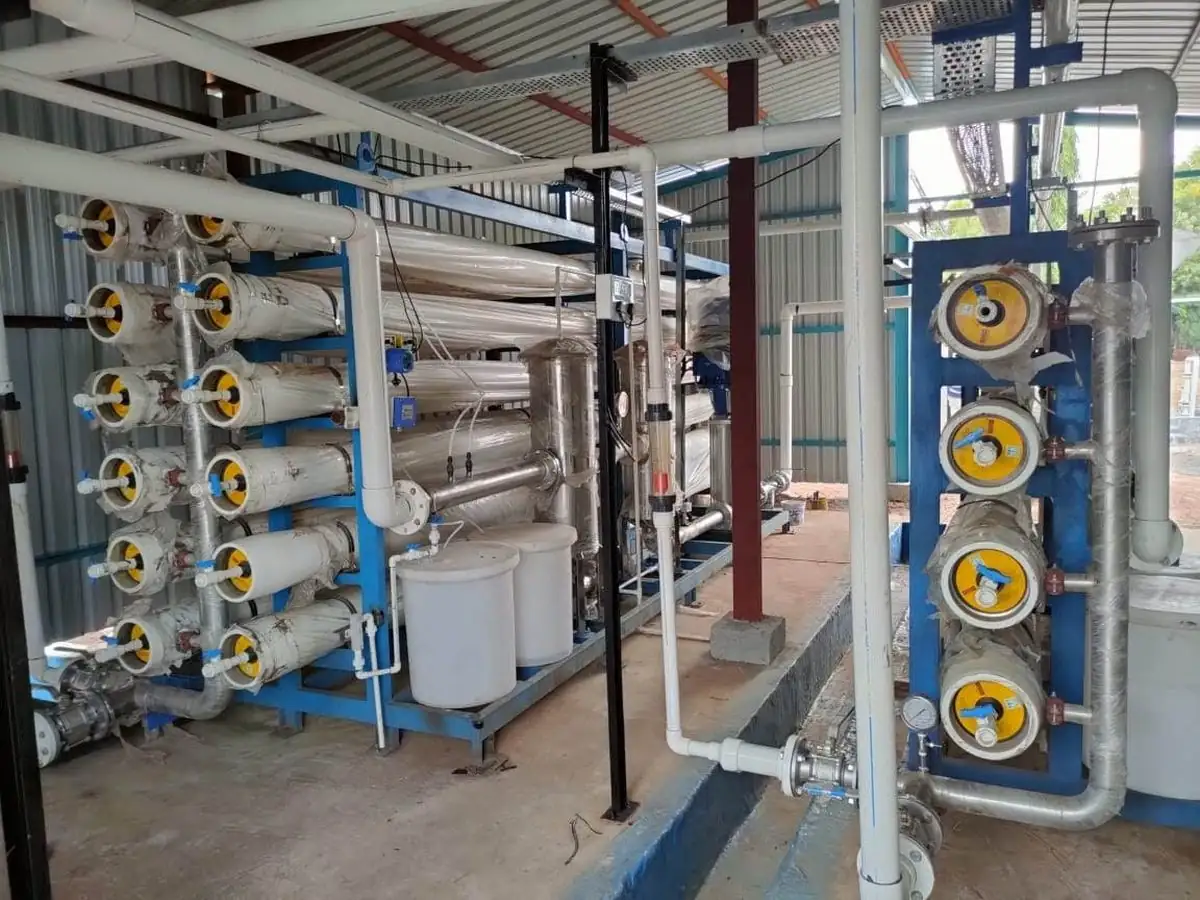
RO membrane skid of the distillery condensate polishing unit at Indo Nuclear
Benefits

What a CPU delivers for your plant

  • Lower freshwater intake - recover about 85% of condensate as reusable water.

  • Reduced ETP load - less wastewater to treat means lower operating cost.

  • Supports ZLD & compliance - a key building block for Zero Liquid Discharge.

  • Operating cost savings - save on raw water procurement, pumping and treatment.

  • Water security - a steady internal source through the crushing and distillation season.

  • Sustainability - measurable water conservation for ESG reporting.

  • Cooling Tower Make-upPrimary application
  • Fermentation & DilutionProcess water
  • Boiler FeedWith downstream polishing
  • Utility WaterWashing & gardening
Scope of Services

End-to-end project support

From feasibility to performance optimization, delivered as a complete project or at any individual stage. Equipment is manufactured at our Talawade (Pune) facility.

  1. 01

    Assess

    Condensate analysis & feasibility
  2. 02

    Design

    Process design & engineering
  3. 03

    Supply

    In-house manufacturing
  4. 04

    Install

    Erection & installation
  5. 05

    Commission

    Start-up & operator training
  6. 06

    Optimize

    Upgrades & debottlenecking
Proven Track Record

Trusted by leading sugar & distillery groups

CPUs delivered across Maharashtra, Karnataka, Madhya Pradesh, Uttar Pradesh, Bihar, Odisha, Haryana, Assam, Chhattisgarh and West Bengal.

Client Application Capacity
Balrampur Chini Mills, Babhnan Sugar CPU 1,400 KLPD
Belgaum Sugars Ltd., Belgaum Sugar CPU 4,200 KLPD
NSL Sugars Ltd., Beed CPU & WTP 4,400 KLPD
Ugar Sugar Works, Karnataka CPU 2,500 KLPD
MRN Saipriya Sugars (Nirani Group) Distillery CPU 2,500 KLPD
Kamakhya Biofuels Pvt. Ltd., Guwahati WTP & CPU 3,000 KLPD
Quenergy Sugar Pvt. Ltd., Solapur CPU 2,200 KLPD
Kedarnath Distillery, Bagalkot Distillery CPU 2,000 KLPD
Gangamai Sugars & Construction Ltd., Shevgaon Distillery CPU 1,400 KLPD
Sonasati Organics Ltd., Bihar Distillery CPU 1,600 KLPD

Upcoming in 2026: CPU projects for Godavari Biorefineries (2,000 KLD), Malhar Sugar (1,750 KLD) and a 6 MLD CPU for Satish Sugars.

Why SBS Water

Why industries choose us

  • 01

    Sugar & distillery specialists

    Focused expertise in water and wastewater treatment for these industries.

  • 02

    Strong CPU portfolio

    Installations with leading sugar and distillery groups across India.

  • 03

    In-house manufacturing

    Our Talawade facility ensures quality control and timely delivery.

  • 04

    High-recovery design

    Proven two-stage RO delivering about 85% water recovery.

  • 05

    New plants & upgrades

    Solutions for greenfield projects and revamps of existing systems.

  • 06

    Regional presence

    Offices in Pune, Talawade and Nipani for faster support.

FAQs

Frequently asked questions

Which CPU is right for my plant, RO-based or Biological?

RO-based CPUs suit sugar excess condensate and lower-strength condensate, with a compact footprint. Biological CPUs suit high-COD distillery condensates such as dryer condensate, evaporation condensate and spent lees, where removing the organic load biologically first protects the membranes. We recommend the technology after analysing your condensate.

What is a Condensate Polishing Unit?

A CPU is a treatment system that removes residual organics, dissolved solids, volatile compounds and other contaminants from process condensate, so the recovered water can be reused within the plant instead of being discharged.

Where is condensate generated in sugar and distillery plants?

In sugar mills, excess condensate comes from juice evaporators and pan boiling. In distilleries, process condensate is produced mainly during concentration of spent wash in multiple-effect evaporators (MEE) and other thermal operations.

What can the treated condensate be used for?

Depending on the design and final quality, polished condensate can be reused for cooling tower make-up, fermentation and process dilution, boiler feed (with suitable downstream polishing) and other utility applications.

What recovery does an SBS CPU achieve?

Our RO-based CPU's two-stage RO design typically recovers about 85% of the condensate. RO-I operates at around 67% recovery and RO-II treats the RO-I reject at 50-55% recovery, minimising the reject sent to ETP.

Why is the condensate cooled and neutralized first?

Raw condensate is usually warm (37-40 °C) and acidic (pH 3.5-4.5). Cooling to about 32 °C and correcting pH with alkali dosing protects the RO membranes, improves rejection and extends membrane life.

Can you upgrade an existing CPU?

Yes. We assess existing condensate treatment systems, identify performance limitations, and provide modification, equipment replacement, capacity enhancement and optimization services.

What capacities do you handle?

We have executed CPU projects from around 300 KLPD to 4,400 KLPD, and a 6 MLD CPU is among our upcoming projects. Each plant is sized to the client's actual condensate generation.

Planning a new CPU or upgrading an existing one?

Share your condensate details with us. Our engineers will recommend a treatment scheme suited to your plant, capacity and reuse target.

Get a Free Consultation