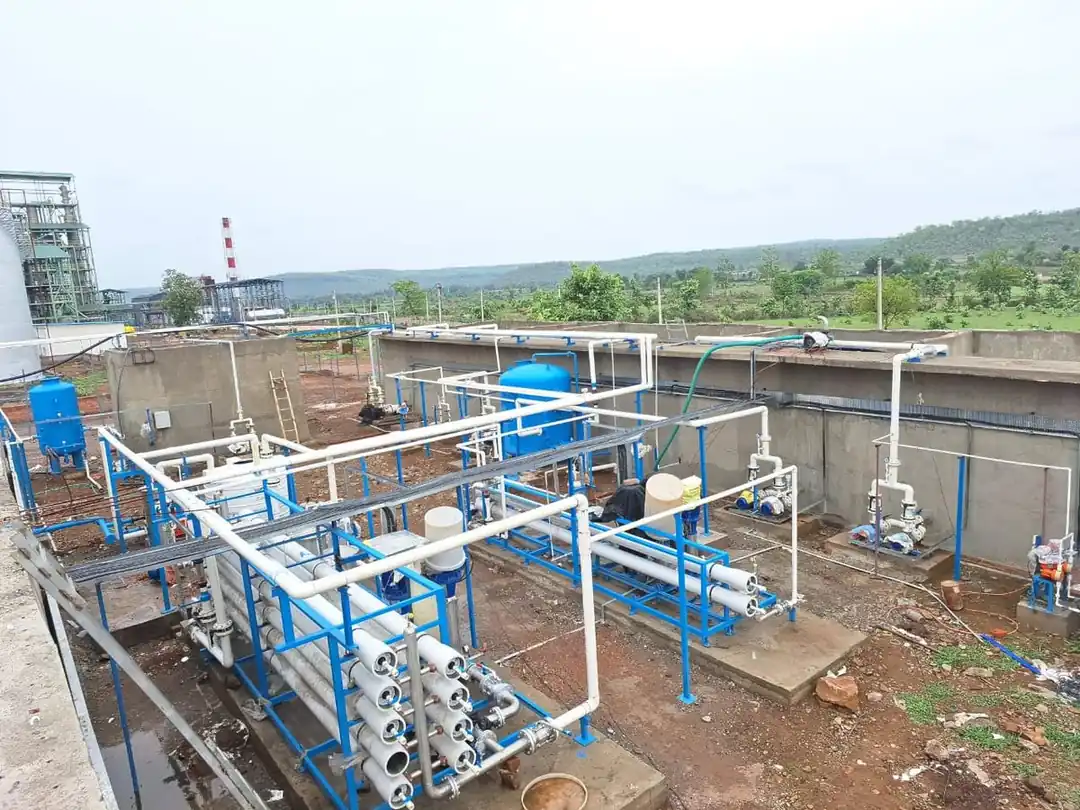
CPU + RO
- How RO is added
- Two-stage RO (RO-I + RO-II on RO-I reject) after cooling, neutralization and dual media filtration.
- Result
- About 85% condensate recovery; permeate TDS below 100 ppm.

High-recovery industrial RO systems, built standalone or integrated into every Condensate Polishing Unit, Water Treatment Plant and Effluent Treatment Plant we deliver, so your treated water is truly fit for reuse.

Reverse Osmosis (RO) is a membrane process that applies high pressure to push water through a semi-permeable membrane. Water molecules pass through; dissolved salts, organics, colour, bacteria and other impurities are rejected. The result is purified water (permeate) and a small concentrated stream (reject).
Conventional treatment, whether clarification, filtration or biological treatment, removes suspended solids and much of the organic load, but it cannot remove dissolved salts. RO is the step that does. That is why SBS Water & Infra Projects Pvt. Ltd. treats RO as the final purification stage of every plant we build.
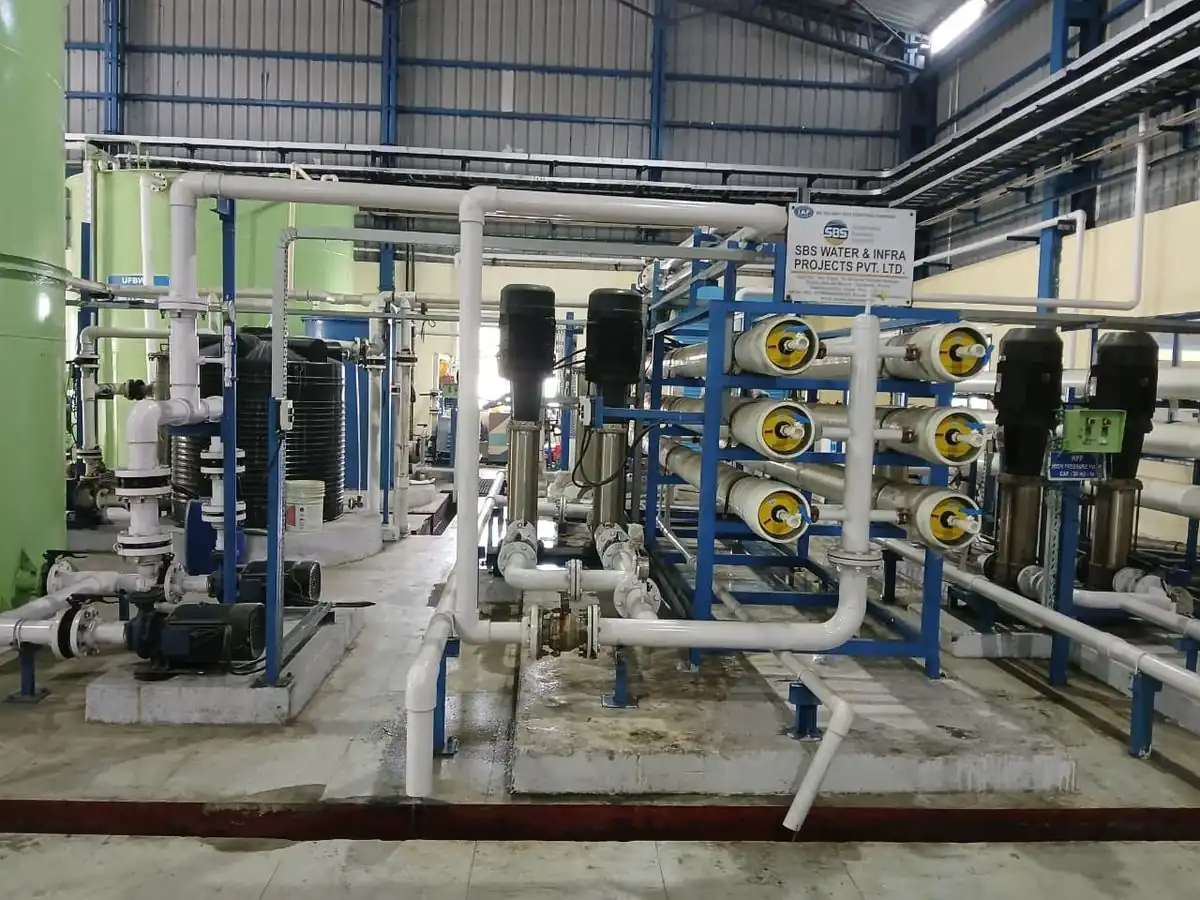
Every CPU, WTP and ETP we deliver includes RO purification. The upstream plant acts as RO pre-treatment, and the RO delivers the final water quality.
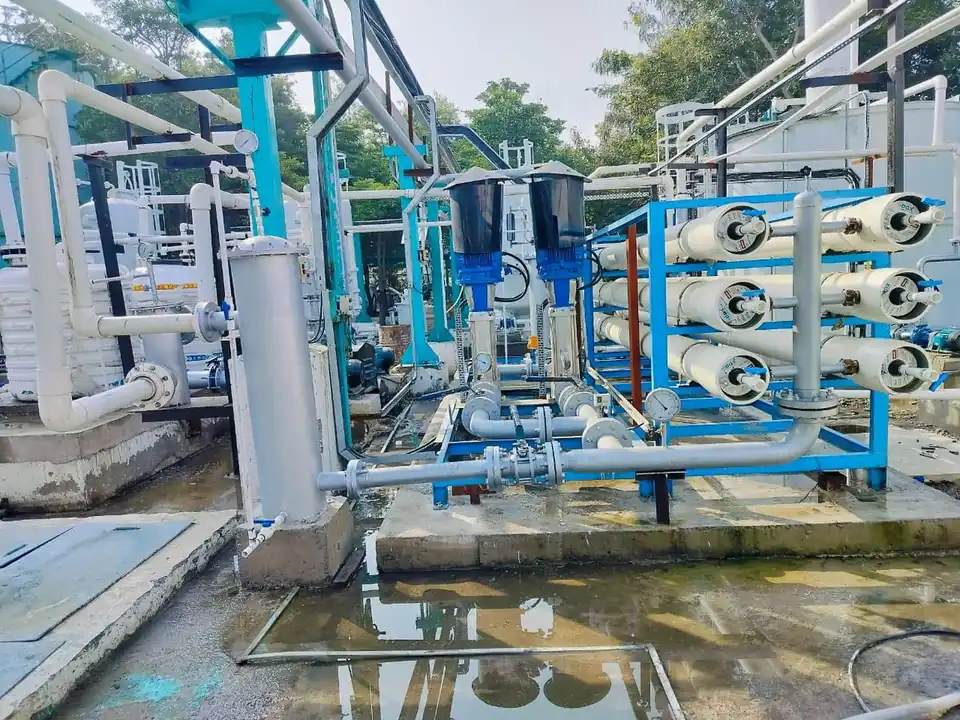

One design and one supplier, so pre-treatment is matched exactly to membrane needs. That means higher recovery, longer membrane life, fewer cleanings, water fit for process and boiler pre-treatment, and a ready pathway to Zero Liquid Discharge.
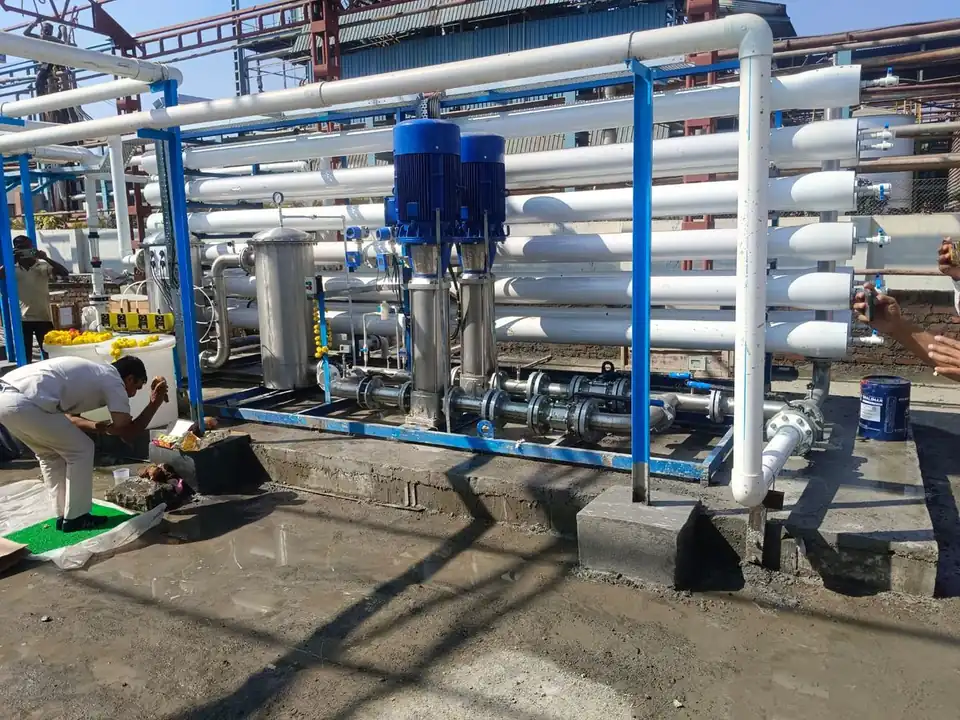
Two-stage RO after cooling, alkali dosing, flocculation and DMF.
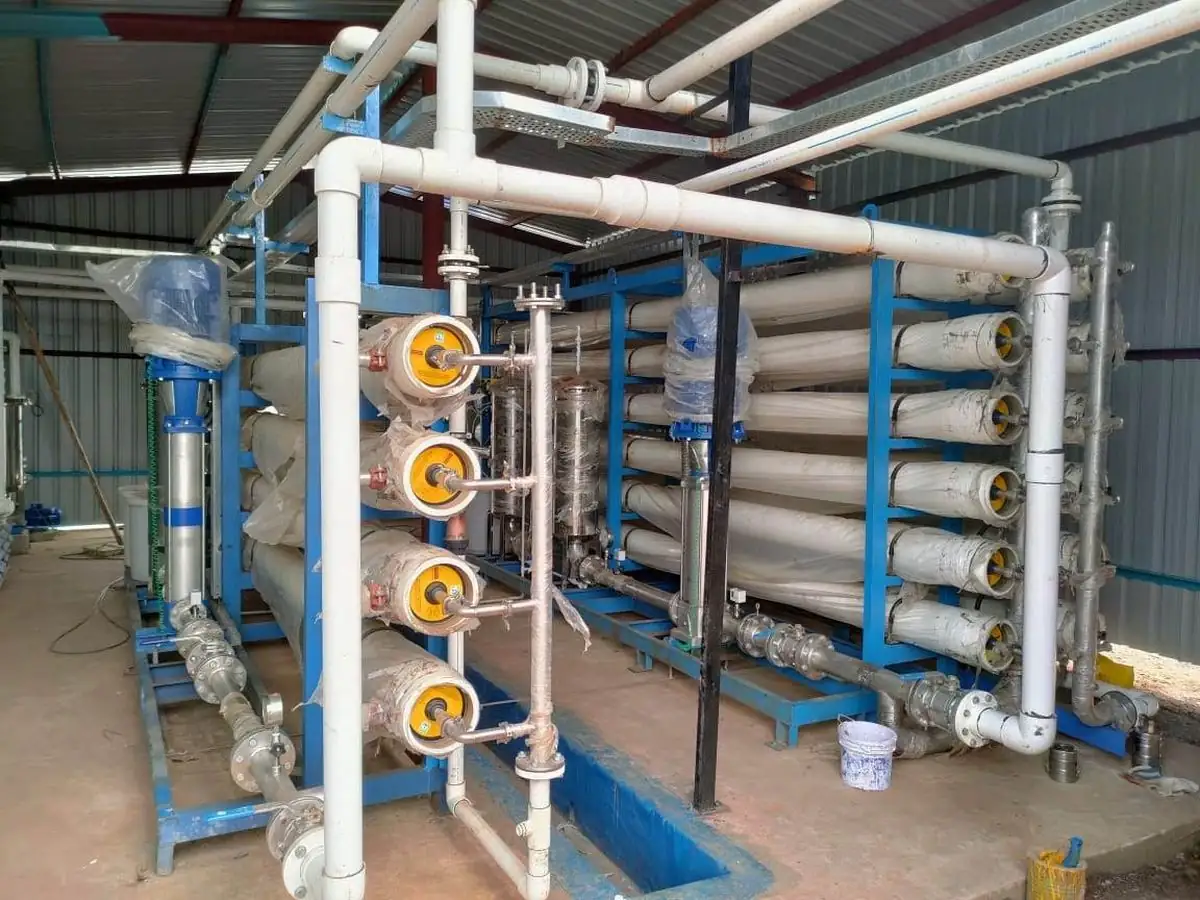
Dedicated RO plants recovering water from one of the distillery industry's toughest streams.

UF followed by RO recovers treated effluent for process and cooling reuse.
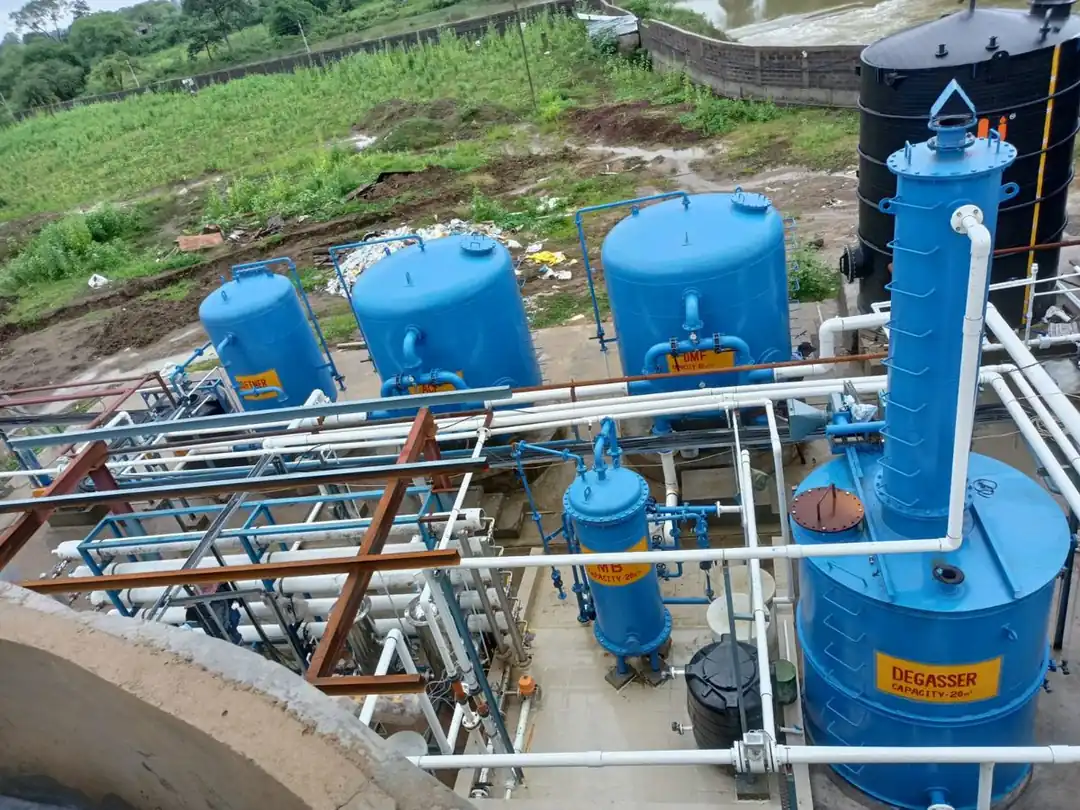
RO after WTP pre-treatment for low-TDS water.
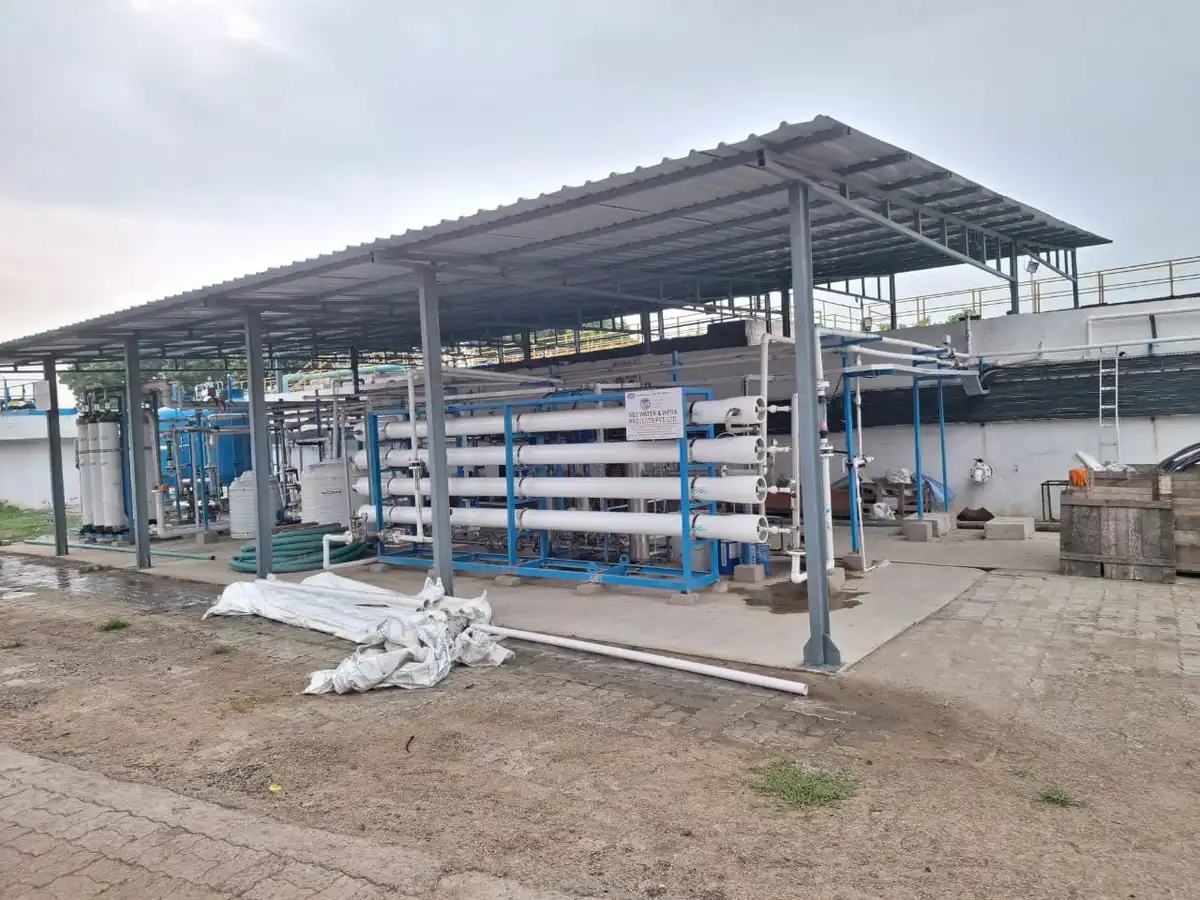
Standalone RO plants and RO add-ons for existing CPUs, WTPs and ETPs.
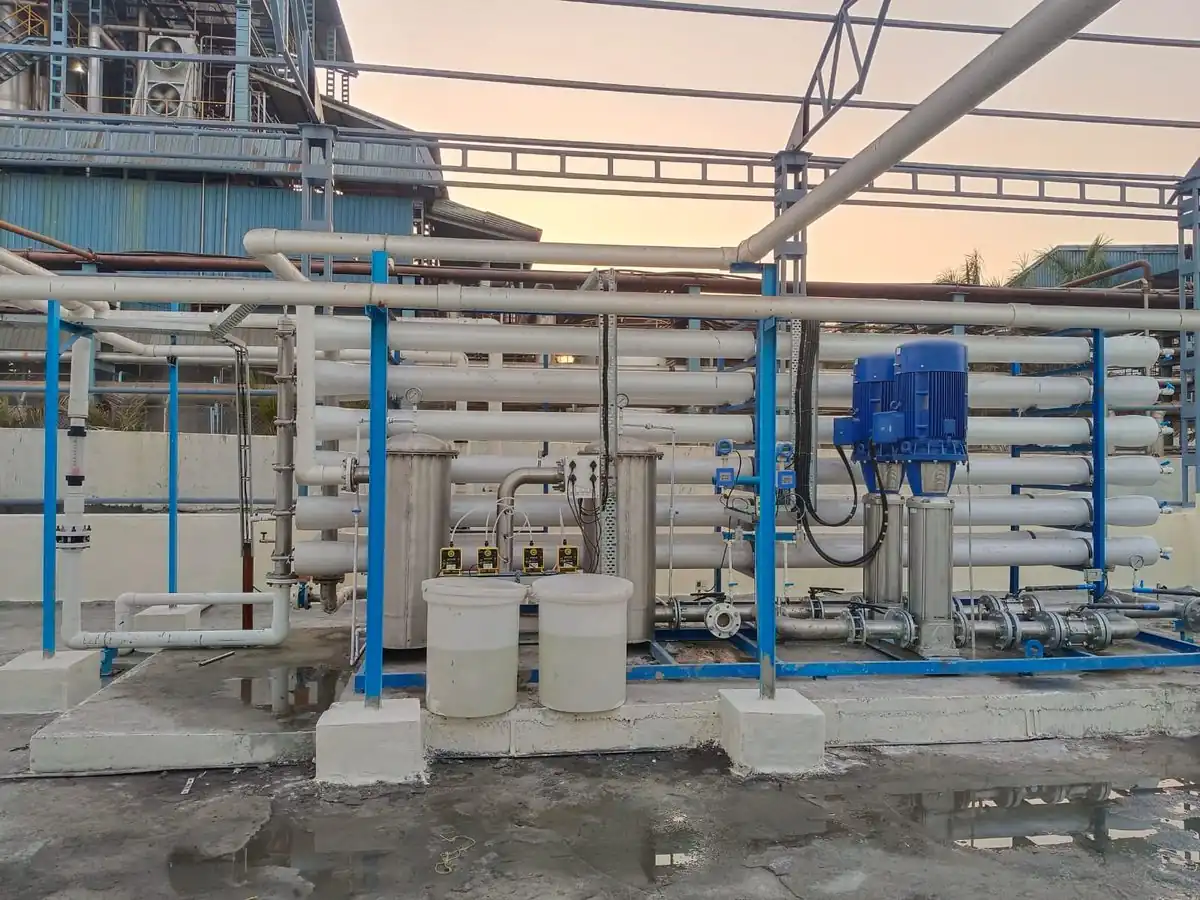
Keeping membranes performing for the long term.
Water from the upstream CPU, WTP or ETP is conditioned, filtered and passed through two RO stages for maximum recovery.
From our 4,400 KLPD RO-based CPU for NSL Sugars.
| Parameter | Raw Condensate | RO Permeate |
|---|---|---|
| TDS | 600 ppm | < 100 ppm |
| COD | 6,000 ppm | < 300 ppm |
| BOD | 2,500 ppm | < 100 ppm |
| Volatile Acidity | 2,500 ppm | < 250 ppm |
| Turbidity | 5 NTU | < 2 NTU |
| pH | 3.5 - 4.5 | 6.5 - 8.0 |
Actual performance depends on feed water characteristics; each RO is designed after analysing the client's water.
High-efficiency designs for 85-90% recovery with minimum reject.
RO-II treats RO-I reject to lift overall recovery.
Cooling, pH correction, DMF, ACF and UF tuned to the feed.
Parallel trains (e.g., 2 × 100 m³/h) for flexibility and maintenance.
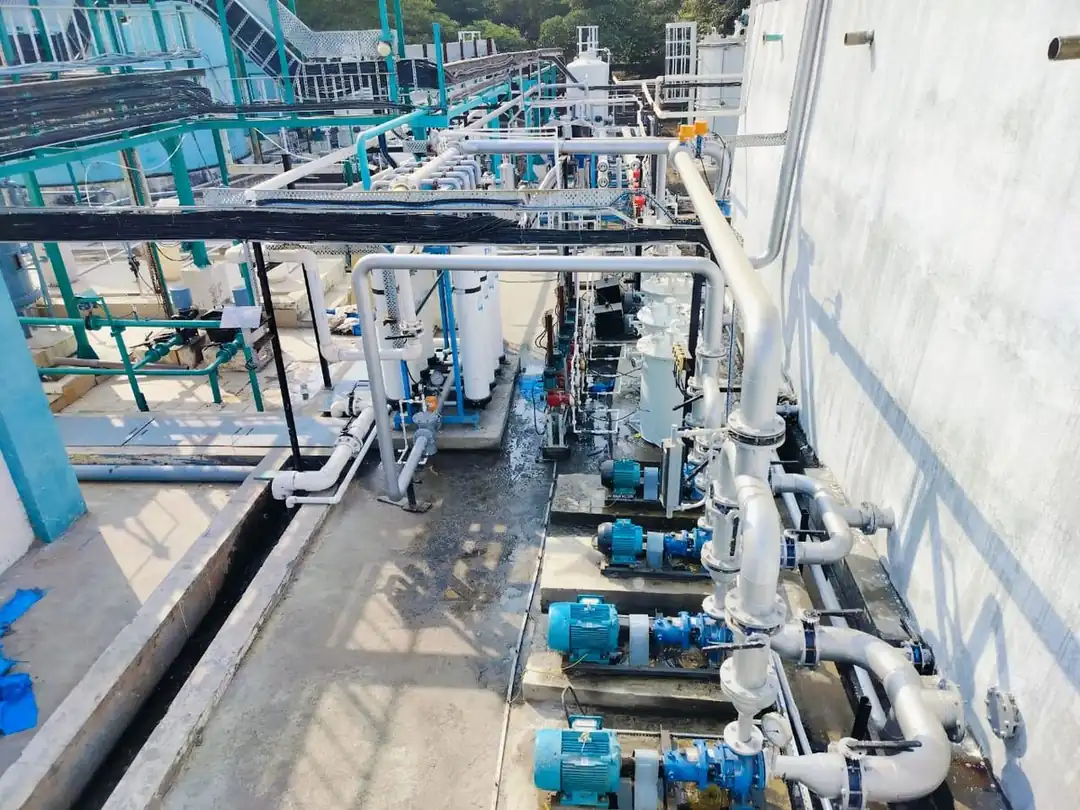
CNP / Xylem / Grundfos pumps; Hitech / Torrey UF; SBS-made housings.
Delta / Siemens panels with online pH, TDS, conductivity and ORP.

Highest water purity - removes dissolved salts and organics conventional treatment cannot.
Maximum recovery - 85-90% of feed recovered as reusable water.
Lower freshwater use - cuts raw water drawal significantly.
Equipment protection - low-TDS water reduces scaling in cooling towers and boilers.
Compliance & sustainability - reuse instead of discharge; supports ZLD.
Scalable - compact, modular systems that expand with demand.
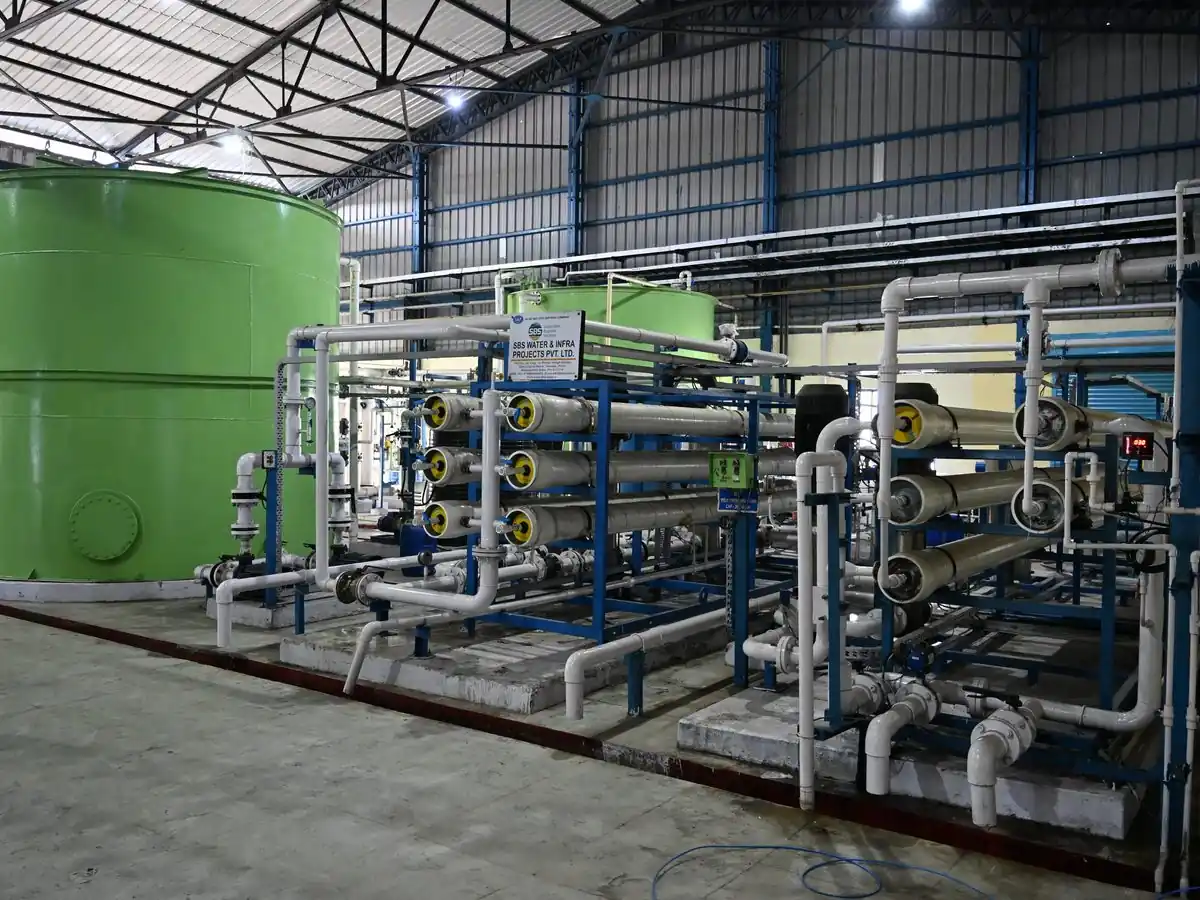
4,400 KLPD RO-based CPU with two RO-I trains and RO-II reject recovery, producing low-TDS permeate for cooling tower reuse.



| Client | Plant | Capacity |
|---|---|---|
| NSL Sugars Ltd., Beed | RO-based CPU & WTP | 4,400 KLPD |
| Balrampur Chini Mills, Balrampur Unit | UF + RO Post CPU | 4,200 KLPD |
| Balrampur Chini Mills, Balrampur | ETP + UF + RO | 2,400 KLPD |
| Belgaum Sugars Ltd., Belgaum | Sugar CPU | 4,200 KLPD |
| Ugar Sugar Works, Karnataka | CPU | 2,500 KLPD |
| Kamakhya Biofuels Pvt. Ltd., Guwahati | WTP & CPU | 3,000 KLPD |
Designed into every CPU, WTP and ETP, not added as an afterthought.
85-90% recovery designs, proven at 4,400 KLPD scale.
Pre-treatment, RO, reject management and ZLD from one partner.
Housings, vessels and panels made at our Talawade facility.
Standalone RO and add-ons to existing systems.
Offices in Pune, Talawade and Nipani for faster service.
RO uses high pressure to push water through a semi-permeable membrane. The membrane lets water pass but rejects dissolved salts, organics, colour and microorganisms, producing purified water (permeate) and a small concentrated reject stream.
Conventional treatment removes suspended solids and much of the organic load, but not dissolved salts. RO removes TDS and residual organics, turning treated water into high-quality water fit for reuse. Adding it to every plant maximizes the value of the water you treat.
Our high-efficiency RO designs are engineered for 85-90% recovery. In our RO-based CPU, two-stage RO (RO-I ~67%, RO-II 50-55% on RO-I reject) achieves about 85% overall recovery.
RO reject is a small, concentrated stream. Depending on the plant, it is sent to the ETP, used in suitable applications, or concentrated further in evaporators for Zero Liquid Discharge.
Membranes foul quickly if suspended solids, oil, high temperature or wrong pH reach them. Our CPUs, WTPs and ETPs act as RO pre-treatment, keeping feed water within membrane limits, extending membrane life and reducing cleaning.
Yes. We assess your existing CPU, WTP or ETP and add UF / RO stages, upgrade membranes or increase RO capacity, often without replacing the whole plant.
Planning a CPU, WTP or ETP, or want to add RO to an existing plant? Share your water analysis and our engineers will design the right RO scheme.
Get a Free Consultation