
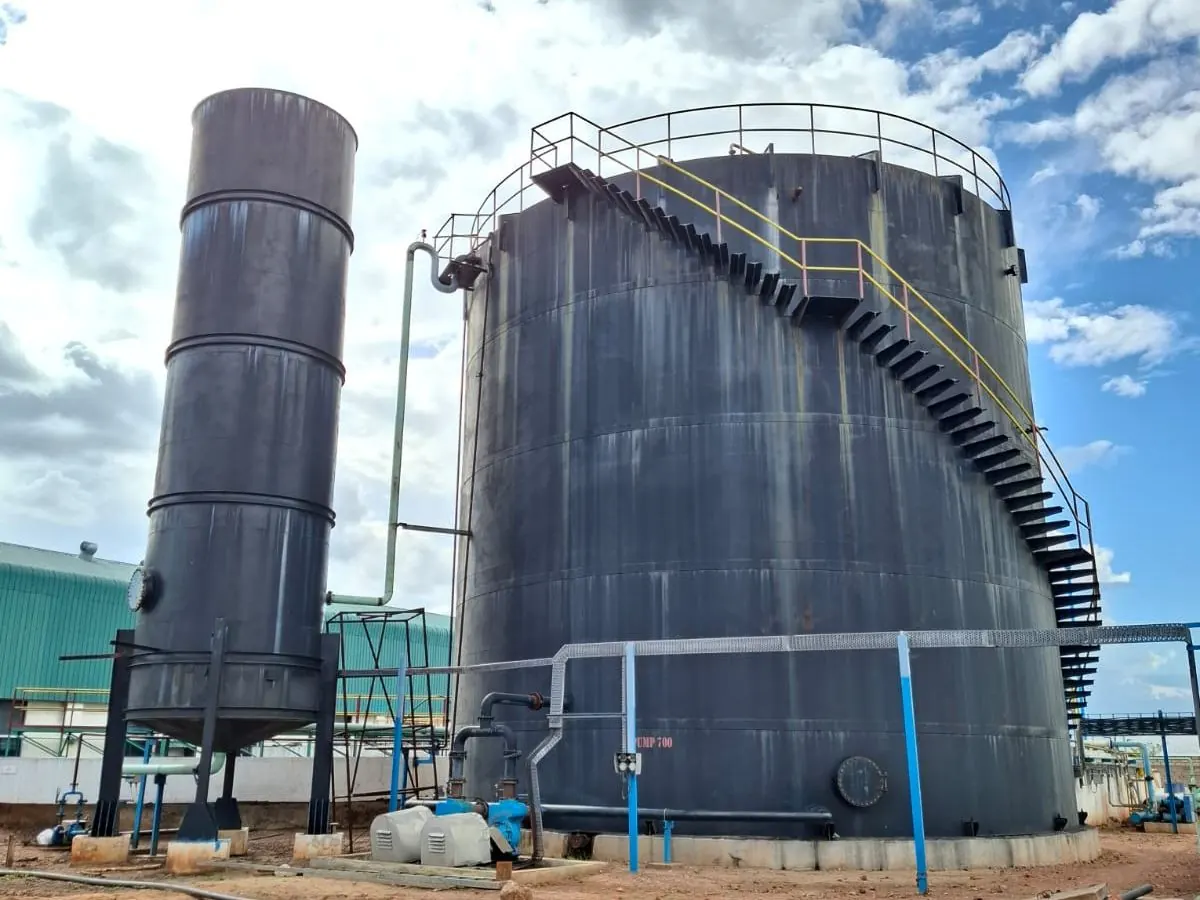
Anyone who has toured a molasses distillery would agree that the spent wash tank is an unforgettable experience. The brown liquid emanates a pungent aroma of burnt sugar that lingers in the lungs for days and is sufficiently acidic to give one an insight into the strength of sulfuric acid.
It is this spent wash that defines distillery effluent, which is a class of its own and not simply a scaled-up version of municipal sewage. In this blog I will discuss what inflows a distillery should consider, why the traditional treat and discharge philosophy is running out of steam, and how zero liquid discharge (ZLD) is in fact a paradigm shift in design thinking.
What comes out of a distillery
While many people might think of distillery effluent as a single-stream waste, the reality is that there are several types of waste waters. The largest single source is spent wash, a byproduct of stripping and rectification columns that is removed after alcohol has been distilled out. For a molasses-based distillery, 8-15 L of spent wash are generated per liter of alcohol - depending on the technology used, with higher gravity fermentations resulting in lower volumes.
Other than spent wash, spent lees are also generated as a small side-stream from the analyser or rectifier column. This waste is much lighter than spent wash, and is sometimes re-used within the fermenters. Cooling tower blow down is another waste stream, one that is relatively small but highly saline. Boiler blow down and process condensates are also generated, although these are hot and relatively clean and are often discharged directly. Washings from floor, fermenter and CIP cleaning add organic load and surfactants to the mix.
A grain-based distillery is comparatively simple, as most of the waste is thin stillage that can be dried and used as cattle feed.
Why is spent wash so difficult to treat?
The numbers below are only indicative, and apply to spent wash generated from molasses. Different distilleries have different spent wash characteristics depending on the quality of molasses, fermentation and other process variables, so it is best to test a representative sample from your distillery.
| Parameter | Typical Range |
|---|---|
| pH | 3.5 - 4.5 |
| COD | 80,000 - 150,000 mg/L |
| BOD | 30,000 - 60,000 mg/L |
| Total Dissolved Solids | 60,000 - 100,000 mg/L or higher |
| Temperature at discharge | 70 - 90°C |
| Colour | Dark Brown |
Municipal sewage is a benchmark for difficult waste water, and has a COD of the order of a few hundred mg/L. Spent wash has a COD that is two orders of magnitude higher. And yet, this is not the most challenging characteristic - the colour of spent wash is prohibitively high as well. The cause is melanoidins, which are thermally generated polymers formed from sugars and amino acids during heating. These are resistant to biodegradation, and can persist in the effluent even after extensive treatment, meaning that a distillery’s effluent will always be dark in colour.
The next challenge is represented by the high salt content of spent wash. Potassium dominates in terms of cations, while the anions are primarily sulphate, with some chloride and calcium. Evaporators used in ZLD are especially challenged by sulphate, which has a propensity to crystallize in evaporator surfaces during concentration. If the salts are not handled properly, they can wreak havoc with the ecosystem of the digesters, and in the case of sulphate, can lead to hydrogen sulphide gas being emitted from the digester - a serious safety hazard. High temperature and acidity of the waste stream add to the challenge, as does the sheer quantity of spent wash - for perspective, a distillery which produces 1000 litres of alcohol per day will have to manage 10,000 litres of spent wash.
Why treat and discharge is no longer viable
The standard approach for years had been anaerobic digestion followed by aerobic polishing and land application or discharge into water bodies. While this reduced the COD significantly, it did little to address the colour or salt content. Moreover, as clusters of distilleries started to appear, the combined impact on water bodies and ground water started to be noticeable, and regulatory scrutiny intensified. Pollution control authorities in India have mandated zero liquid discharge from distilleries, as a result of which no effluent from the production process can leave the site in liquid form. These requirements are not uniform across the country, and it is best to consult the CPCB and your state pollution control board to understand what applies to your distillery.
What does ZLD mean for distillery effluent treatment?
This is the most important section, as it defines what ZLD means to a distillery. In a word - paradigm shift. One of the easiest mistakes to make when designing a ZLD system is to view it as an end-of-pipe solution, when in fact it completely redefines the design philosophy. Instead of thinking about how to treat the effluent to meet discharge criteria, one has to think in terms of water management and conservation - how much water can be saved, and what can be done with the concentrate that is generated.
First and foremost, it is necessary to reduce the volume of spent wash to be treated. Every litre of spent wash that is avoided results in significant savings in downstream processing. This can be achieved through high gravity fermentation, improved yeast technology and process optimisation, and reusing spent lees back in the fermentation vessels. After reducing the volume of spent wash, it is sent to anaerobic digesters for biomethanation, which reduces the COD content and results in production of biogas that can be used to fuel the boiler - a win-win situation. However, biomethanation is a delicate process and should be approached with caution - problems with temperature, pH and sulphate in the spent wash can lead to severe operational issues with the digester, requiring several weeks to recover.
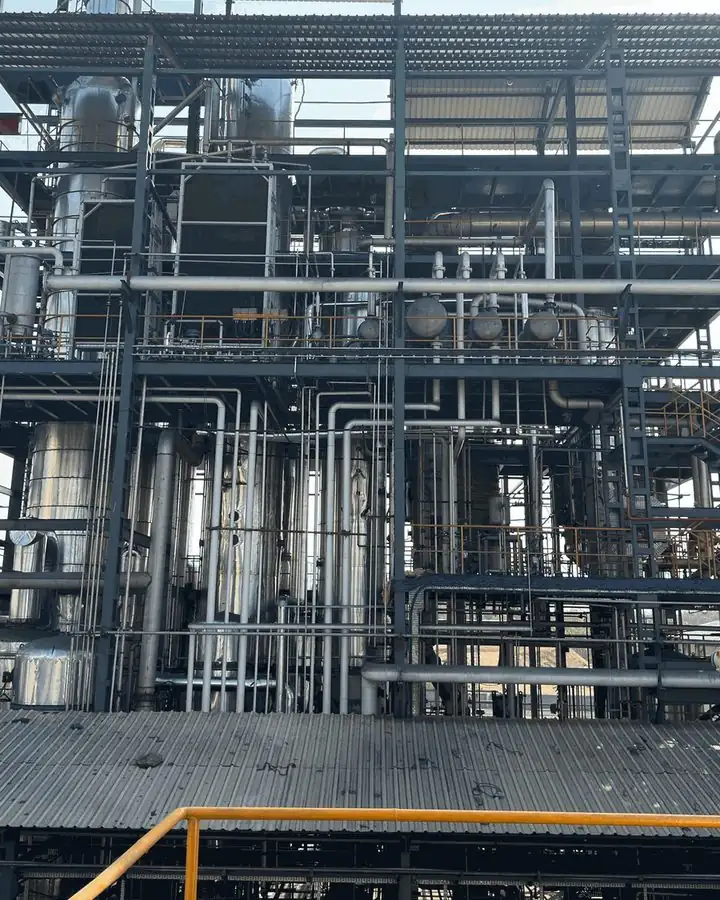
The digesters must be followed by evaporators to concentrate the waste stream further, and multiple-effect evaporators are the preferred option. Evaporators are the workhorse of any ZLD distillery - and also the most expensive and challenging part in terms of operations and maintenance. Scaling and fouling of evaporators are the bane of any ZLD designer and operator.
The evaporated concentrate has two options - it can be sent to an incineration boiler along with bagasse, coal or biomass to generate power, or it can be mixed with press mud or other organic waste to generate compost. Incineration results in potash-rich ash that can be used to make potash fertilizer, subject to regulatory approvals. Composting is a viable alternative for sugar mills with integrated distilleries, but requires space and time.
The topic of condensate polishing is one that is often overlooked but is critically important for a ZLD distillery. The condensate from evaporators is a large volume of waste water that can either be dumped or treated and re-used within the facility. It contains volatile organics, ammonia and other dissolved gases, and therefore must be polished with appropriate technologies before it can be used as make-up water for cooling towers or process dilution. It is sometimes possible to treat the condensate to boiler feed specifications, thereby creating a closed-loop water system with no fresh water input or effluent discharge. It is impossible to have a ZLD without condensate polishing.
The other waste streams - cooling tower blow down, boiler blow down and washings - are treated in a similar manner with RO systems, with the reject sent to evaporators.
The alternative approaches compared
| Treat and discharge | Zero liquid discharge | |
|---|---|---|
| Objective | Meet discharge standards | No liquid effluent |
| Key units | Anaerobic digestion | Evaporator + incineration or composting |
| Fresh water consumption | High | Lower |
| Energy consumption | Moderate | Higher |
| Capital cost | Lower | Higher |
| Regulatory risk | Higher | Lower |
| Solid residue | Sludge | Ash or compost |
Common design pitfalls
- Thinking of spent wash as a constant when in reality it varies significantly from distillery to distillery. It is essential to size equipment based on pilot-scale or analytical data.
- Underestimation of evaporator scaling - leads to frequent cleaning and downtime. Make sure to build in cleanings and have a standby evaporator vessel.
- Not paying attention to sulphate - it will find ways to ruin your day, from causing digester upsets to introducing corrosive hydrogen sulphide gas into the biogas stream.
- Condensate polishing is an afterthought - in reality, a ZLD distillery that cannot reclaim its condensate as make-up water or process water is not really a ZLD distillery.
- Not monitoring process variables - continuous monitoring of COD, pH, volatile fatty acids, flow and conductivity is necessary, but at the very least these parameters should be measured daily.
- Planning for maintenance downtime - a distillery that operates only intermittently must still maintain its digesters and membranes throughout the year.
Payback period and cost-benefit analysis
I have saved the best for last - the economics. In effect, a ZLD distillery has no economics - it is not really an investment decision to begin with. Building a basic treat-and-discharge system is cheap, but comes with regulatory risks. By contrast, the initial capital outlay for ZLD is higher but comes with significant offsets in the form of biogas, condensate re-use and value recovery from ash or compost. The regulatory risk is all but eliminated as well. For many distilleries, the alternatives to ZLD are either a prohibitively expensive treat-and-discharge system or a ZLD system with a short payback period.
FAQs
What is spent wash in a distillery?
Spent wash is the distillery waste generated at the bottom of stripping and rectification columns after spirit has been distilled out. It is hot, dark and highly contaminated with organics.
How much spent wash does a distillery generate?
For molasses-based distilleries, 8-15 L of spent wash are generated per liter of alcohol produced, depending on the process used.
What is meant by zero liquid discharge in a distillery?
Zero liquid discharge is when no liquid effluent is released from the distillery into the environment. The spent wash is digested and concentrated and then incinerated or composted - and the condensate from incineration is re-used within the distillery.
Why is biomethanation done before evaporators?
Biomethanation helps remove a substantial amount of organics and recover biogas, which reduces the organic load on the evaporators, and offsets some of the energy costs.
Can evaporator condensate be re-used?
Yes, but it must be polished to remove volatile organics, ammonia and other dissolved gases. It can then be used as make-up water for cooling towers or process dilution, and in some cases as boiler feed water.
Is ZLD a viable option economically?
For most distilleries it is, especially given the tightening environmental regulations. The cost offsets from biogas, re-used condensate, and value recovery from ash or compost should be enough to justify the higher capital costs.
Conclusion
Distillery effluent cannot be treated as an end-of-pipe nuisance to be dealt with at the cheapest possible price. It has a set of characteristics that demand a customized approach - high strength, dark colour, high salt content, and high temperature.
ZLD is the only way forward, and its implementation requires adopting a completely new approach to effluent management. By reducing volume, recovering energy, concentrating the waste stream, and re-using water, a ZLD distillery minimizes both environmental impact and costs. Those who approach ZLD as a system - rather than a single unit - are likely to find that their distillery’s effluent management system is both simple to operate and easy to justify economically.
Planning a distillery effluent treatment or ZLD system? Contact our team to learn more about spent wash characterisation, technology selection and design.